What Is DeFi? A Simple Guide to Decentralized Finance
If you have been following crypto for a while, you have probably heard the word DeFi many times.
Bitcoin, Ethereum, NFTs, stablecoins and airdrops get most of the attention, but DeFi is one of the biggest ideas sitting underneath the crypto industry.
So, what exactly is DeFi?
DeFi stands for Decentralized Finance.
In simple terms, it means using blockchain technology and smart contracts to provide financial services without depending on a traditional bank or other central intermediary.
You can lend money, borrow crypto, trade tokens, provide liquidity and use other financial products directly through blockchain-based applications.
The interesting part is that you can interact with these services using a crypto wallet instead of opening a traditional bank account.
But DeFi isn’t just about removing banks.
It’s about changing the way financial services are built and accessed.
What Does “Decentralized Finance” Actually Mean?
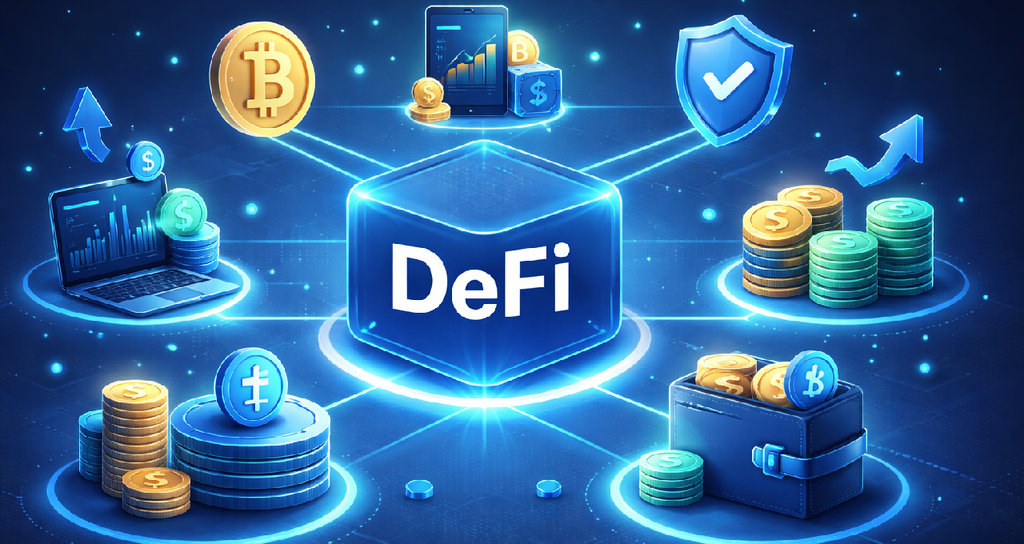
Let’s break the term into two parts.
Finance is easy. It includes things like lending, borrowing, trading, saving and investing.
Decentralized means that these activities can be handled by blockchain networks and smart contracts rather than one company controlling everything.
In traditional finance, if you want a loan, a bank normally decides whether you qualify. The bank controls the process, holds the money and sets the terms.
In DeFi, a smart contract can handle the rules automatically.
Ethereum describes DeFi as a category of financial products and services that are accessible through blockchain applications, including lending, borrowing, trading and earning interest.
That doesn’t mean DeFi has no rules.
It means the rules are often written into code and executed by smart contracts.
How Does DeFi Work?
The easiest way to understand DeFi is to understand smart contracts.
A smart contract is basically a program running on a blockchain.
It can hold assets and automatically perform certain actions when predefined conditions are met.
Imagine you lend someone money through a traditional financial institution.
You need the institution to keep records, manage the transaction and enforce the agreement.
Now imagine replacing that middleman with software.
The software holds the assets and follows rules written into its code.
That’s roughly the idea behind many DeFi applications.
Instead of trusting a company to manually handle every transaction, users interact with a smart contract.
Ethereum’s documentation explains that DeFi uses cryptocurrencies and smart contracts to provide financial services without traditional intermediaries.
Of course, this doesn’t mean smart contracts are automatically safe. Code can contain bugs, and poorly designed protocols can create serious risks.
What Can You Actually Do With DeFi?
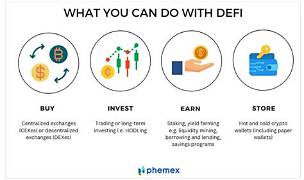
This is where DeFi gets interesting.
It isn’t one single application.
It’s an entire ecosystem of financial products.
1. Lending
One of the most common DeFi use cases is lending.
You can deposit crypto into a lending protocol, where other users may borrow those assets.
In return, lenders can receive interest.
The exact return depends on the protocol, asset and market conditions.
Unlike a traditional savings account, DeFi lending doesn’t necessarily involve a bank holding your money.
The smart contract manages the lending system.
2. Borrowing
DeFi also allows users to borrow crypto.
Usually, borrowers provide collateral before receiving a loan.
For example, someone might deposit ETH as collateral and borrow a stablecoin against it.
If the value of the collateral falls too much, the protocol may automatically liquidate the position according to its rules.
This is very different from getting a normal bank loan.
You generally aren’t sitting across a desk explaining your salary, credit history and employment details to a loan officer.
Instead, the blockchain protocol uses collateral and predefined rules.
3. Decentralized Exchanges
Another major part of DeFi is the DEX, or decentralized exchange.
A DEX allows users to swap one crypto asset for another without depositing their funds into a centralized exchange in the traditional way.
Platforms such as Uniswap helped popularize this model.
Ethereum currently lists decentralized exchanges alongside lending, yield and other DeFi applications in its ecosystem.
The biggest difference is control.
With a centralized exchange, you normally deposit your crypto into the exchange.
With a decentralized exchange, you can interact with the protocol directly from your wallet.
That doesn’t remove risk, but it changes who controls the assets during the transaction.
What Are Liquidity Pools?
If you’ve ever wondered how a decentralized exchange can let people trade without a traditional order book, liquidity pools are part of the answer.
A liquidity pool contains crypto assets supplied by users.
For example, a pool might contain two different tokens that traders can swap between.
People who provide liquidity can potentially earn fees generated by trading activity.
This is often called liquidity providing.
But there’s an important catch.
Providing liquidity doesn’t mean guaranteed profit.
You can face risks such as smart-contract vulnerabilities, token price movements and something called impermanent loss.
So seeing a high advertised yield doesn’t automatically mean the opportunity is good.
What Are DeFi Yields?
You’ll often see DeFi platforms advertising attractive yields.
Yield basically refers to the return you may earn from putting your assets to work.
For example, you might lend a stablecoin and receive interest.
Or you might provide liquidity and receive a portion of trading fees.
Some protocols also offer additional token rewards.
This is one reason DeFi became so popular.
People could potentially earn returns from their crypto without simply waiting for the price of the asset to increase.
But there is a rule every beginner should remember:
Higher yield usually comes with higher risk somewhere in the system.
If a platform promises an extremely high return with almost no risk, that’s a reason to investigate more carefully, not a reason to deposit money immediately.
DeFi vs Traditional Finance
The difference becomes easier to understand when you put the two systems next to each other.
In traditional finance, banks and financial institutions act as intermediaries.
In DeFi, smart contracts and blockchain networks can perform many of those functions.
Traditional financial services often require accounts, identity verification and approval.
Many DeFi applications can be accessed with a compatible crypto wallet and an internet connection.
Traditional markets may operate according to specific business hours.
Blockchain-based applications can operate continuously.
Ethereum describes DeFi as an open financial system where users can access services such as lending, borrowing and trading without relying on traditional intermediaries.
But this doesn’t mean DeFi is automatically better than traditional finance.
It simply works differently.
Banks have regulations, customer support systems and consumer protections that many DeFi protocols don’t provide in the same way.
That’s an important difference.
Why Do People Use DeFi?
There are several reasons.
The first is access.
A person with an internet connection and a compatible wallet can potentially interact with DeFi applications without needing permission from a traditional financial institution.
The second is control.
Users can often keep control of their assets rather than handing them to an intermediary.
The third is transparency.
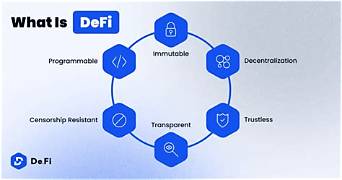
Blockchain transactions and smart-contract activity can be publicly inspected, depending on the network and application.
The fourth is global access.
A DeFi protocol doesn’t necessarily care whether you’re using it from India, Brazil or another part of the world.
The technology is available on the same blockchain.
That’s one of the reasons people see DeFi as more than simply another crypto trend.
What Are the Risks of DeFi?
This is the part that gets ignored when people only talk about making money.
DeFi can be risky.
Very risky in some cases.
Smart Contract Risk
A smart contract is software.
And software can have bugs.
If a vulnerability is discovered, attackers may exploit it and users could lose funds.
Impermanent Loss
Liquidity providers can lose money relative to simply holding their tokens because of changes in the prices of assets inside a liquidity pool.
Liquidation
If you borrow against crypto collateral and its value drops too much, your position can be liquidated.
Token Risk
Some DeFi platforms use their own tokens.
Those tokens can fall dramatically in price.
A high yield paid in a token isn’t very useful if the token itself loses most of its value.
Scam Projects
Because anyone can build blockchain applications, not every DeFi project deserves your trust.
A professional-looking website doesn’t prove that a protocol is legitimate.
This is one of the biggest differences between understanding DeFi and simply chasing high APYs.
What Are Stablecoins Doing in DeFi?
Stablecoins have become an important part of the DeFi ecosystem.
The problem with using assets like ETH for every financial transaction is volatility.
If you borrow $1,000 worth of ETH today, its value can be very different tomorrow.
Stablecoins try to solve this by tracking assets such as the U.S. dollar.
Protocols can use stablecoins for lending, borrowing, trading and liquidity.
Ethereum specifically highlights stablecoins as a way to bring relatively stable digital currencies into DeFi applications.
This is one reason stablecoins and DeFi have grown alongside each other.
Is DeFi Only on Ethereum?
No.
Ethereum is one of the biggest and most established DeFi ecosystems, but DeFi exists across multiple blockchains.
Different networks compete on things like transaction costs, speed, liquidity and developer ecosystems.
Some DeFi applications are also designed to work across multiple networks.
Ethereum’s current DeFi ecosystem includes applications covering DEXs, lending, payments, yield, real-world assets and more.
So when someone says “DeFi,” they’re talking about a broad category, not one blockchain.
What Does DeFi Mean for the Future?
This is where things get really interesting.
DeFi is moving beyond basic token swaps and lending.
The ecosystem is increasingly connecting with real-world assets, stablecoins, payments and other financial products.
Ethereum’s current DeFi ecosystem, for example, includes projects working with tokenized real-world assets and institutional financial products alongside traditional DeFi applications.
That could eventually create financial products that operate almost entirely on-chain.
Imagine a financial product that automatically collects payments, distributes returns and updates ownership without a company manually processing every step.
That’s the kind of thing DeFi developers are trying to build.
Whether all of these ideas become mainstream is still an open question.
Should Beginners Start Using DeFi?
There’s no need to rush.
The first step should be understanding how the system works.
Learn about wallets.
Understand gas fees.
Learn what smart contracts do.
Understand liquidity pools and lending.
Most importantly, learn how to check a protocol before putting money into it.
Start by experimenting with small amounts you can afford to lose rather than treating DeFi like a guaranteed income source.
DeFi can be powerful, but the responsibility is much greater because users often have direct control over their assets.
If you make a mistake, there may not be a customer-support number that can reverse the transaction.
Final Thoughts
DeFi is basically an attempt to rebuild parts of the financial system using blockchain technology.
Instead of relying entirely on banks and other intermediaries, users can interact with smart contracts that handle lending, borrowing, trading, payments and other financial activities.
That’s the exciting part.
But the same thing that makes DeFi interesting also makes it risky.
You get more control, but you also take on more responsibility.
You get open access, but you have to do more of your own research.
You can find attractive yields, but those yields come with risks that aren’t always obvious at first glance.
So if you’re new to crypto, don’t think of DeFi as a shortcut to easy money.
Think of it as a new financial technology.
Once you understand how the pieces fit together—wallets, smart contracts, tokens, liquidity pools, DEXs, lending and stablecoins—DeFi starts to make a lot more sense.
And that’s when you can decide which parts of this new financial system are actually useful to you.