
Stablecoins Are Changing Crypto: Are They the Future of Money?
Stablecoins Are Changing Crypto: Are They the Future of Money?
For years, when people heard the word “crypto,” they usually thought about Bitcoin, Ethereum and crazy price movements.
But there is another part of the crypto industry that is quietly becoming much more important.
Stablecoins.
Unlike Bitcoin, stablecoins are not designed to jump 20% in a day or double your money overnight. Their main purpose is much simpler: they try to maintain a stable value, usually by being linked to a traditional currency such as the U.S. dollar.
And now something interesting is happening.
Banks and major financial companies are no longer treating stablecoins as just another crypto experiment. In September 2026, a group of 21 financial institutions, including Goldman Sachs, Bank of America, Citi and Deutsche Bank, announced plans to create a dollar-pegged stablecoin aimed at launching in 2027.
So the obvious question is:
Are stablecoins slowly becoming the future of money?
What Exactly Is a Stablecoin?
The easiest way to understand a stablecoin is to think of it as a digital version of a traditional currency.
Take USDC, for example.
USDC is designed to stay close to the value of one U.S. dollar. USDT works with the same basic idea.
Instead of keeping dollars only in a bank account, stablecoins represent value on a blockchain. That means they can be transferred using blockchain networks, potentially across borders and outside traditional banking hours.
This is what makes them interesting.
Bitcoin was created as a decentralized form of money, but its price can change dramatically.
If you want to send $1,000 to someone and you don’t want the value to suddenly become $800 or $1,200, a dollar stablecoin makes much more sense.
Why Do People Actually Use Stablecoins?
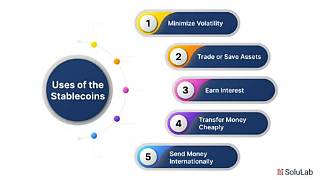
Stablecoins have become useful for several reasons.
The first is trading.
Crypto traders often move money between different assets. Instead of converting crypto back into traditional currency every time, they can move into a stablecoin and stay inside the crypto ecosystem.
But trading is only one part of the story.
Stablecoins are also being explored for:
- Cross-border payments
- Business payments
- Remittances
- Payroll
- Digital commerce
- Moving money between financial institutions
- On-chain lending and other financial services
That is why the conversation around stablecoins has started moving beyond crypto exchanges.
The Federal Reserve has also noted that many banks are looking at stablecoin-related opportunities, including reserve services, tokenized deposits and digital-asset custody.
Why Are Banks Suddenly Interested?
This is probably the biggest change happening right now.
Banks spent years being cautious about crypto.
Now some of the same institutions are exploring their own blockchain-based money.
Why?
Because banks don’t want to watch a new payment system grow while they sit on the sidelines.
Imagine sending money internationally through the traditional banking system.
There can be multiple intermediaries involved. Depending on the payment route, settlement can take time, fees can add up and the process can become complicated.
A blockchain-based payment system can potentially move value much faster.
That doesn’t mean every stablecoin transaction is instant or free.
But the underlying technology gives financial companies a new way to think about moving money.
The new bank consortium involving 21 institutions is a good example of how seriously traditional finance is now taking the idea. The planned stablecoin would initially be dollar-based, with the group also considering other major currencies later.
Stablecoins Could Make International Payments Easier
This is where stablecoins could have a genuinely useful real-world impact.
Imagine a company in India needs to pay a business in another country.
With traditional banking, the payment may pass through banks, currency conversions and different settlement systems.
With stablecoins, the two businesses could potentially move a digital dollar directly between compatible wallets or payment systems.
The receiver can then convert it into local currency.
Visa is already exploring stablecoin-powered payouts and account-to-account payments, particularly for emerging markets.
That’s a much bigger idea than simply using stablecoins to buy crypto.
It turns blockchain into a possible payment rail.
But Stablecoins Are Not the Same as Dollars
This part is important.
A stablecoin may be designed to track the U.S. dollar, but it is not literally the same thing as holding a dollar in your bank account.
The stability depends on the issuer, reserves, redemption process, technology and the rules surrounding the stablecoin.
That’s why people often look closely at what backs a stablecoin.
If a company issues billions of dollars worth of tokens, users naturally want to know:
What is backing all those tokens?
Are there cash reserves?
Government securities?
Other assets?
How easily can holders redeem their tokens?
These questions matter because the entire idea depends on trust.
What Happens If a Stablecoin Loses Its Peg?

Stablecoins are called “stable” for a reason, but that doesn’t mean they can never move away from their target price.
This is called a depeg.
For example, if a stablecoin designed to trade at $1 suddenly falls to $0.95, people will immediately start asking what went wrong.
A depeg can happen for different reasons.
There could be concerns about reserves, problems with an issuer, market panic, liquidity issues or technical problems.
And once people lose confidence, things can get worse quickly.
This is one reason stablecoin regulation has become such an important topic.
USDT vs USDC: Why Are They So Important?
When people talk about stablecoins, two names usually come up first:
USDT and USDC.
USDT is issued by Tether and has become the largest dollar stablecoin by market capitalization.
USDC is issued by Circle and has also become one of the biggest stablecoins in the market.
Both are designed around the same basic idea: keeping their value close to one U.S. dollar.
But there are differences in their issuers, reserve structures, regulatory positioning, supported networks and how people use them.
For everyday crypto users, the important thing isn’t simply choosing whichever has the biggest market cap.
It’s understanding who issued it, how it is backed and where you are using it.
Regulation Could Change the Stablecoin Industry
Stablecoins are becoming too important for governments to ignore.
Regulators are now trying to figure out how these digital currencies should work inside the financial system.
The goal is not necessarily to kill stablecoins.
In many cases, the bigger goal is to make sure issuers maintain appropriate reserves, users have clear redemption rights and the system doesn’t create unnecessary financial risks.
The European Central Bank has also warned that the growth of privately issued stablecoins raises questions around financial stability and the role of traditional money.
That’s why regulation could actually become one of the biggest factors determining which stablecoins survive.
Could Stablecoins Replace Bank Transfers?
Probably not completely.
At least not anytime soon.
Banks still provide many services that stablecoins don’t.
People need loans, mortgages, savings accounts, credit cards, identity checks and many other financial products.
But stablecoins could change how money moves between these systems.
Think about the internet.
The internet didn’t eliminate every company that existed before it. Instead, it changed how those companies communicated and did business.
Blockchain could eventually do something similar to payments.
Stablecoins could become a digital layer that sits between banks, businesses, payment companies and consumers.
There Is Still a Big Problem
Stablecoins have huge potential, but adoption isn’t automatic.
People need easy wallets.
Businesses need payment infrastructure.
Governments need clear rules.
Banks need to integrate the technology.
And users need to trust the companies issuing the stablecoins.
There is also the question of whether people actually want to hold digital dollars instead of traditional bank money.
For crypto users, this may seem obvious.
For the average person, it isn’t.
If sending money through a normal banking app already works well, convincing someone to use a crypto wallet won’t be easy.
That is why stablecoins may have their biggest opportunity in areas where traditional payments are expensive, slow or difficult to access.
So, Are Stablecoins the Future of Money?
It’s too early to say that stablecoins will replace traditional money.
But it would also be a mistake to treat them as just another crypto trend.
The industry is moving in an interesting direction.
Bitcoin is trying to change how people think about scarce digital assets.
Stablecoins are trying to solve a different problem:
How can money move more easily in a digital world?
And now banks are entering that competition themselves.
The fact that major financial institutions are planning their own stablecoin shows how much the conversation has changed.
A few years ago, the idea of major banks building their own blockchain-based dollars would have sounded unusual.
Today, it’s becoming a serious business strategy.
Maybe stablecoins won’t replace cash.
Maybe they won’t replace banks.
But they could become one of the main ways money moves between the traditional financial system and the blockchain world.
And honestly, that could end up being much more important than another crypto coin going up 100%.For years, when people heard the word “crypto,” they usually thought about Bitcoin, Ethereum and crazy price movements.
But there is another part of the crypto industry that is quietly becoming much more important.
Stablecoins.
Unlike Bitcoin, stablecoins are not designed to jump 20% in a day or double your money overnight. Their main purpose is much simpler: they try to maintain a stable value, usually by being linked to a traditional currency such as the U.S. dollar.
And now something interesting is happening.
Banks and major financial companies are no longer treating stablecoins as just another crypto experiment. In September 2026, a group of 21 financial institutions, including Goldman Sachs, Bank of America, Citi and Deutsche Bank, announced plans to create a dollar-pegged stablecoin aimed at launching in 2027.
So the obvious question is:
Are stablecoins slowly becoming the future of money?
What Exactly Is a Stablecoin?
The easiest way to understand a stablecoin is to think of it as a digital version of a traditional currency.
Take USDC, for example.
USDC is designed to stay close to the value of one U.S. dollar. USDT works with the same basic idea.
Instead of keeping dollars only in a bank account, stablecoins represent value on a blockchain. That means they can be transferred using blockchain networks, potentially across borders and outside traditional banking hours.
This is what makes them interesting.
Bitcoin was created as a decentralized form of money, but its price can change dramatically.
If you want to send $1,000 to someone and you don’t want the value to suddenly become $800 or $1,200, a dollar stablecoin makes much more sense.
Why Do People Actually Use Stablecoins?
Stablecoins have become useful for several reasons.
The first is trading.
Crypto traders often move money between different assets. Instead of converting crypto back into traditional currency every time, they can move into a stablecoin and stay inside the crypto ecosystem.
But trading is only one part of the story.
Stablecoins are also being explored for:
- Cross-border payments
- Business payments
- Remittances
- Payroll
- Digital commerce
- Moving money between financial institutions
- On-chain lending and other financial services
That is why the conversation around stablecoins has started moving beyond crypto exchanges.
The Federal Reserve has also noted that many banks are looking at stablecoin-related opportunities, including reserve services, tokenized deposits and digital-asset custody.
Why Are Banks Suddenly Interested?
This is probably the biggest change happening right now.
Banks spent years being cautious about crypto.
Now some of the same institutions are exploring their own blockchain-based money.
Why?
Because banks don’t want to watch a new payment system grow while they sit on the sidelines.
Imagine sending money internationally through the traditional banking system.
There can be multiple intermediaries involved. Depending on the payment route, settlement can take time, fees can add up and the process can become complicated.
A blockchain-based payment system can potentially move value much faster.
That doesn’t mean every stablecoin transaction is instant or free.
But the underlying technology gives financial companies a new way to think about moving money.
The new bank consortium involving 21 institutions is a good example of how seriously traditional finance is now taking the idea. The planned stablecoin would initially be dollar-based, with the group also considering other major currencies later.
Stablecoins Could Make International Payments Easier
This is where stablecoins could have a genuinely useful real-world impact.
Imagine a company in India needs to pay a business in another country.
With traditional banking, the payment may pass through banks, currency conversions and different settlement systems.
With stablecoins, the two businesses could potentially move a digital dollar directly between compatible wallets or payment systems.
The receiver can then convert it into local currency.
Visa is already exploring stablecoin-powered payouts and account-to-account payments, particularly for emerging markets.
That’s a much bigger idea than simply using stablecoins to buy crypto.
It turns blockchain into a possible payment rail.
But Stablecoins Are Not the Same as Dollars
This part is important.
A stablecoin may be designed to track the U.S. dollar, but it is not literally the same thing as holding a dollar in your bank account.
The stability depends on the issuer, reserves, redemption process, technology and the rules surrounding the stablecoin.
That’s why people often look closely at what backs a stablecoin.
If a company issues billions of dollars worth of tokens, users naturally want to know:
What is backing all those tokens?
Are there cash reserves?
Government securities?
Other assets?
How easily can holders redeem their tokens?
These questions matter because the entire idea depends on trust.
What Happens If a Stablecoin Loses Its Peg?
Stablecoins are called “stable” for a reason, but that doesn’t mean they can never move away from their target price.
This is called a depeg.
For example, if a stablecoin designed to trade at $1 suddenly falls to $0.95, people will immediately start asking what went wrong.
A depeg can happen for different reasons.
There could be concerns about reserves, problems with an issuer, market panic, liquidity issues or technical problems.
And once people lose confidence, things can get worse quickly.
This is one reason stablecoin regulation has become such an important topic.
USDT vs USDC: Why Are They So Important?
When people talk about stablecoins, two names usually come up first:
USDT and USDC.
USDT is issued by Tether and has become the largest dollar stablecoin by market capitalization.
USDC is issued by Circle and has also become one of the biggest stablecoins in the market.
Both are designed around the same basic idea: keeping their value close to one U.S. dollar.
But there are differences in their issuers, reserve structures, regulatory positioning, supported networks and how people use them.
For everyday crypto users, the important thing isn’t simply choosing whichever has the biggest market cap.
It’s understanding who issued it, how it is backed and where you are using it.
Regulation Could Change the Stablecoin Industry
Stablecoins are becoming too important for governments to ignore.
Regulators are now trying to figure out how these digital currencies should work inside the financial system.
The goal is not necessarily to kill stablecoins.
In many cases, the bigger goal is to make sure issuers maintain appropriate reserves, users have clear redemption rights and the system doesn’t create unnecessary financial risks.
The European Central Bank has also warned that the growth of privately issued stablecoins raises questions around financial stability and the role of traditional money.
That’s why regulation could actually become one of the biggest factors determining which stablecoins survive.
Could Stablecoins Replace Bank Transfers?
Probably not completely.
At least not anytime soon.
Banks still provide many services that stablecoins don’t.
People need loans, mortgages, savings accounts, credit cards, identity checks and many other financial products.
But stablecoins could change how money moves between these systems.
Think about the internet.
The internet didn’t eliminate every company that existed before it. Instead, it changed how those companies communicated and did business.
Blockchain could eventually do something similar to payments.
Stablecoins could become a digital layer that sits between banks, businesses, payment companies and consumers.
There Is Still a Big Problem
Stablecoins have huge potential, but adoption isn’t automatic.
People need easy wallets.
Businesses need payment infrastructure.
Governments need clear rules.
Banks need to integrate the technology.
And users need to trust the companies issuing the stablecoins.
There is also the question of whether people actually want to hold digital dollars instead of traditional bank money.
For crypto users, this may seem obvious.
For the average person, it isn’t.
If sending money through a normal banking app already works well, convincing someone to use a crypto wallet won’t be easy.
That is why stablecoins may have their biggest opportunity in areas where traditional payments are expensive, slow or difficult to access.
So, Are Stablecoins the Future of Money?
It’s too early to say that stablecoins will replace traditional money.
But it would also be a mistake to treat them as just another crypto trend.
The industry is moving in an interesting direction.
Bitcoin is trying to change how people think about scarce digital assets.
Stablecoins are trying to solve a different problem:
How can money move more easily in a digital world?
And now banks are entering that competition themselves.
The fact that major financial institutions are planning their own stablecoin shows how much the conversation has changed.
A few years ago, the idea of major banks building their own blockchain-based dollars would have sounded unusual.
Today, it’s becoming a serious business strategy.
Maybe stablecoins won’t replace cash.
Maybe they won’t replace banks.
But they could become one of the main ways money moves between the traditional financial system and the blockchain world.
And honestly, that could end up being much more important than another crypto coin going up 100%.