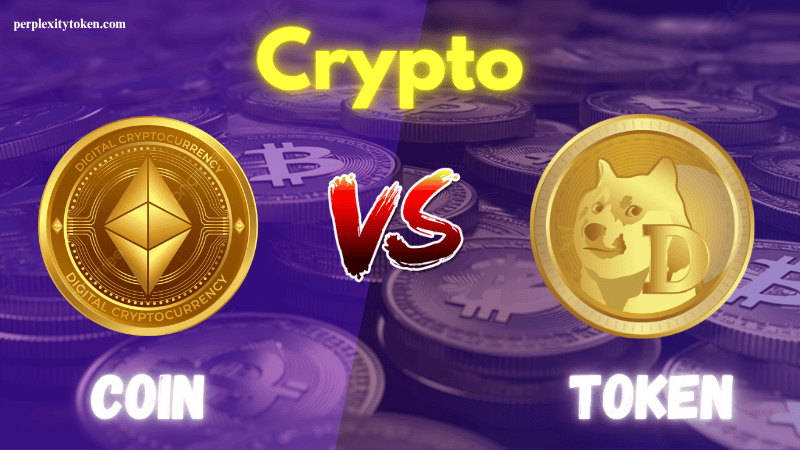
Coins vs Tokens: What’s the Difference and Why Does It Matter?
If you are new to crypto, there is a good chance you’ve heard people say things like Bitcoin is a coin, USDT is a token, and Ethereum has ETH.
Then someone starts talking about ERC-20, smart contracts, blockchains and gas fees, and suddenly a very simple question becomes confusing.
So let’s make it simple.
Coins and tokens are not exactly the same thing.
The easiest way to remember the difference is this:
A coin has its own blockchain. A token is built on someone else’s blockchain.
Bitcoin has its own blockchain, so BTC is a coin.
Ethereum has its own blockchain, so ETH is a coin.
USDT doesn’t have its own blockchain. It can exist on networks such as Ethereum, Tron and others, so USDT is a token.
That one difference explains most of what you need to know.
But there is more to it, especially if you are planning to buy, trade or use crypto.
What Is a Crypto Coin?
Think of a coin as the native money of a blockchain.
Bitcoin runs on the Bitcoin blockchain, and BTC is the native asset of that network.
Ethereum runs on the Ethereum blockchain, and ETH is its native cryptocurrency. ETH is used to pay transaction fees and also plays a role in securing the network through staking.
Other examples include:
- BTC — Bitcoin
- ETH — Ethereum
- SOL — Solana
- ADA — Cardano
- AVAX — Avalanche
- DOT — Polkadot
These projects have their own blockchain infrastructure.
That’s the main thing that separates coins from tokens.
What are coins used for?
Coins can have several jobs.
They can be used to send money from one person to another.
They can be used to pay blockchain transaction fees.
They can be used for staking.
And some people simply hold them as an investment or store of value.
Bitcoin is a good example.
Its main idea is relatively straightforward: create a digital form of money that can be transferred without needing a bank to approve every transaction.
Ethereum took a different approach.
ETH isn’t only used to transfer value. It is also used to pay for activity on the Ethereum network, including interactions with smart contracts.
So even though BTC and ETH are both coins, they don’t necessarily have the same purpose.
So What Is a Token?

Now imagine someone builds an app on Ethereum.
They want to create their own digital currency for that app.
They don’t need to build an entirely new blockchain from scratch.
Instead, they can create a token using Ethereum’s existing infrastructure.
That’s basically what a token is.
Tokens live on an existing blockchain and depend on that network to operate. FINRA also describes tokens as assets developed on blockchains, with uses that can include utility, governance and other functions.
Some well-known examples include:
- USDT
- USDC
- UNI
- LINK
- AAVE
- SHIB
These aren’t all identical in purpose.
USDT and USDC are stablecoins designed to maintain a value linked to the U.S. dollar.
UNI is associated with Uniswap and is used in governance.
Other tokens can be used inside games, DeFi platforms, apps, NFT ecosystems or other blockchain projects.
So when someone says “token,” it doesn’t automatically mean one particular type of asset.
It simply tells you something important about how that asset is built.
The Easiest Example: Bitcoin vs USDT
Let’s say you own 0.1 BTC.
That BTC exists on the Bitcoin blockchain.
Bitcoin is the network, and BTC is its native coin.
Now suppose you have 100 USDT on Ethereum.
USDT isn’t the native currency of Ethereum.
It’s a token operating on Ethereum.
When you send that USDT on Ethereum, you generally need ETH to pay the network’s transaction fee.
That’s because ETH is Ethereum’s native asset and is used to pay for computation and transactions on the network.
This is one of those things beginners often discover the hard way.
They have USDT in their wallet but can’t move it because they don’t have enough ETH to pay the gas fee.
Why Don’t Projects Just Create Their Own Coins?
Because creating a blockchain is much harder than creating a token.
If you want your own coin, you need your own network.
That means dealing with things like:
- Blockchain security
- Validators or miners
- Consensus
- Network infrastructure
- Developers
- Wallet support
- Exchanges
- Users
That’s a lot of work.
Creating a token on an existing blockchain can be much easier.
Ethereum, for example, provides a platform where developers can create smart contracts and launch different types of tokens without building a completely new blockchain.
This is one reason tokens became so popular.
A small project doesn’t necessarily need to spend years building a blockchain before launching its product.
It can use an existing network and focus on building its own application.
ERC-20: A Term You’ll Hear a Lot
If you’ve spent even a little time around crypto, you’ve probably seen ERC-20.
Don’t let the name scare you.
ERC-20 is basically a standard used for creating fungible tokens on Ethereum.
A standard gives developers a common set of rules.
Because many tokens follow the same standard, wallets, exchanges and applications can interact with them more easily.
For example, if a token follows the ERC-20 standard, crypto platforms already know how to handle many of its basic functions.
Ethereum has other token standards too.
ERC-721 is commonly associated with NFTs, where each token can be individually unique.
Coins vs Tokens: The Main Differences
Here’s the simple comparison.
Blockchain
Coin: Has its own blockchain.
Token: Runs on an existing blockchain.
Examples
Coins: BTC, ETH, SOL, ADA.
Tokens: USDT, USDC, UNI, LINK.
Transaction fees
A coin is often the asset used to pay fees on its own network.
For example, ETH is used to pay fees on Ethereum.
A token may require the network’s native coin to pay the transaction fee.
Creation
Creating a coin usually means creating and maintaining a blockchain.
Creating a token can be done using an existing blockchain and its smart-contract infrastructure.
Uses
Coins are often used for payments, network fees, staking and value storage.
Tokens can be used for things like governance, rewards, access to applications, stablecoins, DeFi and digital assets.
Can One Project Have Both a Coin and Tokens?
Yes.
This is another thing that confuses beginners.
A blockchain can have its own native coin while thousands of different tokens operate on that same blockchain.
Ethereum is a perfect example.
ETH is the native coin.
But Ethereum also hosts a huge number of tokens created through smart contracts.
So you could have ETH, USDC, UNI and thousands of other assets operating within the same broader ecosystem.
The blockchain provides the infrastructure.
The tokens use that infrastructure.
What About Solana?
Solana makes the same idea easier to understand.
SOL is Solana’s native coin.
It’s used for transactions and other network functions.
But Solana also hosts thousands of tokens.
So if someone launches a new token on Solana, they don’t need to create an entirely new blockchain.
They can build on Solana’s existing network.
That’s one of the reasons established blockchains can become ecosystems rather than just single cryptocurrencies.
Does Being a Coin Make Something Better Than a Token?
No.
This is a very important point.
Some people assume:
Coin = serious project
Token = random crypto
That’s simply not true.
A token can be extremely useful and widely adopted.
USDT is a good example. It’s a token, but it is one of the most widely used assets in crypto.
On the other hand, having your own blockchain doesn’t automatically make a project successful.
A coin can belong to a weak project, have little real usage, or lose most of its value.
So don’t judge a crypto project just by whether it’s called a coin or a token.
Look at what the project actually does.
How Can You Tell What You’re Buying?
Before buying anything, check the asset itself.
Look at:
Which blockchain does it belong to?
Does it have its own network?
What is the token actually used for?
Who created the project?
How much of the supply is controlled by the team or a small group?
Is there real usage, or is the entire project built around hype?
These questions are much more useful than simply looking at the price.
A token priced at $0.01 isn’t automatically cheaper than a coin priced at $1,000.
The price of one token tells you almost nothing without knowing the total supply and market capitalization.
For example, a project with 100 billion tokens at $0.01 has a $1 billion market capitalization.
So don’t fall into the classic beginner trap of thinking:
“This coin is only 1 cent. If it reaches $1, I’ll become rich.”
The supply matters.
The Simple Rule to Remember
If you forget everything else from this article, remember this:
Coin = native asset of a blockchain.
Token = asset built on an existing blockchain.
BTC belongs to Bitcoin.
ETH belongs to Ethereum.
USDT can run on existing blockchains such as Ethereum and Tron.
That’s the basic difference.
Once you understand that, a lot of crypto terminology starts making more sense.
You stop looking at every cryptocurrency as the same thing and start understanding where it actually fits in the bigger picture.
Final Thoughts
Coins and tokens might sound like two words for the same thing, but they describe two different parts of the crypto world.
Coins are tied directly to their own blockchain.
Tokens are built on top of existing networks.
Neither one is automatically better.
What matters is why the asset exists, what it does, who uses it, how the network works, and whether there is anything real behind the hype.
And that’s probably the most useful thing to remember when you’re exploring crypto.
Don’t just ask:
“What’s the price?”
Ask:
“What am I actually buying?”
Once you know whether you’re looking at a coin or a token—and understand what that asset is actually supposed to do—you’ve already got a much better starting point than someone buying crypto simply because the price looks cheap.