
Crypto Airdrops: How They Work, How to Find Them, and How Not to Get Scammed
Imagine waking up one morning, opening your crypto wallet, and finding that you’ve received tokens you never paid for.
Sounds pretty good, right?
That’s basically the idea behind a crypto airdrop.
Airdrops have become one of the most popular ways for crypto projects to get attention and reward early users. Some people have made hundreds or even thousands of dollars from them. But there’s another side that doesn’t get talked about enough.
For every legitimate airdrop, there are plenty of fake websites, phishing links, and scams trying to steal people’s crypto.
So if you’re interested in airdrops, the real question isn’t just “How can I get free crypto?”
It’s “How do airdrops actually work, and how can I participate without getting my wallet drained?”
Let’s break it down.
What Exactly Is a Crypto Airdrop?
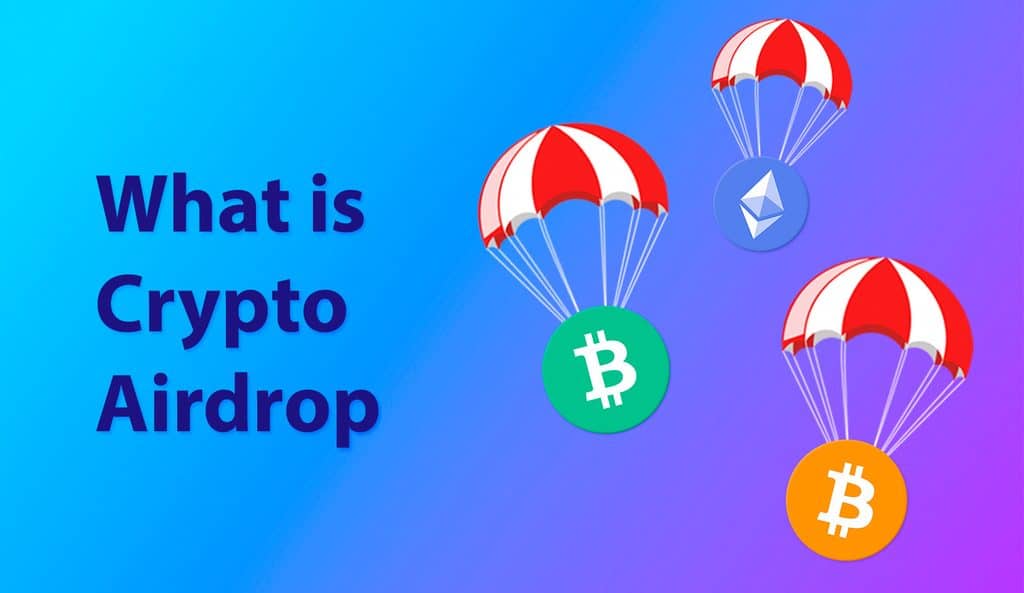
A crypto airdrop is basically when a crypto project distributes tokens to users, usually for free.
But “free” doesn’t always mean you literally do nothing.
A project might reward people for:
- Using its platform
- Trading or providing liquidity
- Bridging assets
- Testing a new blockchain
- Holding certain tokens
- Completing specific tasks
- Being an early user
- Participating in a community
Sometimes a project announces the airdrop beforehand.
Other times, users interact with a project for months without knowing whether they’ll receive anything. Then one day, the project announces a token and rewards some of its early users.
That’s one reason airdrops became so popular.
You aren’t necessarily buying the token.
You’re getting rewarded for being an early participant.
Why Do Crypto Projects Give Away Tokens?
At first, giving away valuable tokens might sound strange.
Why would a company give something away for free?
Because the project gets something in return.
1. It attracts users
A new crypto platform needs people to actually use it.
An airdrop can give users a reason to try the platform.
2. It creates attention
If a project announces a large token distribution, crypto communities immediately start talking about it.
That attention can bring even more users.
3. It rewards early users
Imagine you’re using a new platform when nobody knows about it.
You provide liquidity, test features, or make transactions while the project is still small.
Later, the project becomes successful.
An airdrop can be a way of saying:
“You were here early, so we’re giving you a piece of the network.”
4. It can help decentralize ownership
Many crypto projects want their tokens to be held by a large number of users rather than a small group of investors.
Airdrops can help spread those tokens across a community.
How Does an Airdrop Actually Work?
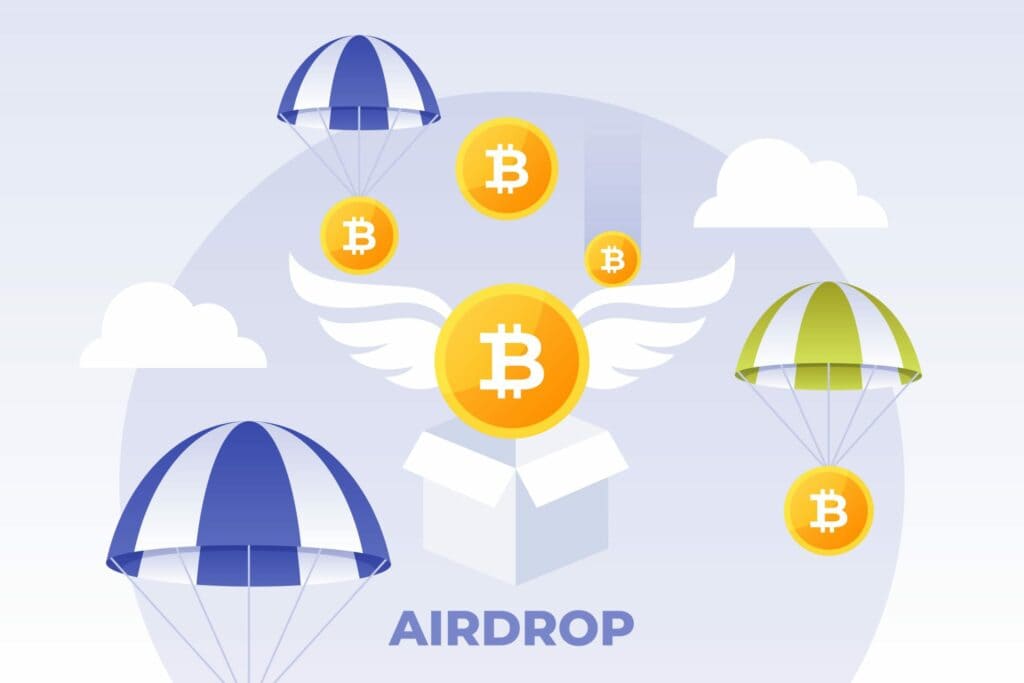
The process can be surprisingly simple.
Let’s say a new blockchain launches.
You start using it early.
You make transactions, use applications built on the network, and interact with different features.
The project may keep a record of those on-chain activities.
Months later, the team announces a token.
They take a snapshot of eligible users or calculate eligibility using certain rules.
Then they distribute tokens to qualifying wallets.
The important thing is that every airdrop has its own rules.
One project might reward transaction activity.
Another might care more about how long you’ve been using the network.
Another might reward liquidity providers.
So there isn’t one universal formula.
The Big Difference Between Airdrops and Giveaways
People often use these words interchangeably, but they’re not exactly the same.
A normal crypto giveaway might simply ask you to follow an account, join a Telegram group, or retweet a post.
An airdrop is usually connected to a crypto project’s ecosystem and token distribution.
For example, a project might reward people who actually used its application before the token launch.
That’s why some of the most interesting airdrops require real usage, rather than simply clicking a few buttons.
How People Look for Potential Airdrops

This is where things get interesting.
If you’re hunting for airdrops, you don’t want to blindly interact with every project you see on social media.
Instead, look for projects that are:
- Building a real product
- Backed by known investors or teams
- Actively developing their technology
- Getting genuine users
- Operating on-chain
- Communicating clearly with their community
- Not making unrealistic promises
A project doesn’t have to guarantee an airdrop.
In fact, many projects never officially promise one.
People often look for “airdrop potential” based on how a project is growing and whether it has a reason to eventually launch a token.
That’s where research becomes important.
Don’t Turn Airdrop Hunting Into a Money Pit
Here’s something beginners often get wrong.
They hear about someone making $10,000 from an airdrop and assume that all they need to do is start clicking around.
It doesn’t work like that.
Some airdrops are worth very little.
Some are worth nothing.
And some require you to spend money on transaction fees or other activities.
So before interacting with a project, ask yourself:
“If I don’t receive an airdrop, was this activity still worth doing?”
That’s a much healthier way to approach it.
If you’re using a product because you genuinely find it useful, any future reward becomes a bonus.
If you’re spending hundreds of dollars only because you hope to receive a token later, you’re taking a much bigger gamble.
The Biggest Danger: Airdrop Scams
This is the part you absolutely shouldn’t ignore.
Airdrop scams are everywhere.
A scammer may create a fake website that looks almost identical to a real crypto project.
You connect your wallet.
The website asks you to approve a transaction.
You click “Confirm.”
And suddenly, your assets are gone.
The scam doesn’t always look suspicious.
Sometimes the website design is professional.
Sometimes the scam is promoted through a hacked social media account.
Sometimes you’ll even receive a token in your wallet that you never asked for.
That’s why you should never assume that something is legitimate just because it appeared in your wallet.
Never Give Anyone Your Seed Phrase
This is one rule worth remembering forever:
Nobody needs your seed phrase to send you an airdrop.
Not a project team.
Not a moderator.
Not a support agent.
Not an influencer.
Not anyone.
Your seed phrase gives access to your wallet.
If someone asks for it, stop immediately.
The same goes for private keys.
A legitimate airdrop should never require you to hand over the keys that control your wallet.
Be Careful With “Claim” Links
One of the most common tricks is a message saying:
“Congratulations! You’ve received an airdrop. Claim now.”
There’s usually a link.
You click it.
The website asks you to connect your wallet.
Then it asks you to approve something.
This is where you can get into trouble.
Before connecting your wallet, check the website address carefully.
Don’t trust a link just because it was sent by someone you follow.
And don’t blindly trust search results either.
Crypto scammers are very good at making fake websites look real.
Use a Separate Wallet for Airdrop Hunting
This is one of the simplest habits that can reduce your risk.
Instead of using the wallet that holds your main crypto savings, create a separate wallet specifically for experimenting with new projects.
Keep only a small amount in it.
That way, if you accidentally interact with a malicious contract, your main holdings aren’t sitting in the same wallet.
It’s not perfect protection, but it’s a much safer setup.
Think of it like carrying a small amount of cash when you’re exploring somewhere unfamiliar instead of carrying all your savings.
Do You Need to Pay for an Airdrop?
Sometimes, yes — but be careful.
You may have to pay blockchain transaction fees when interacting with a network.
That’s normal.
What’s not normal is someone telling you:
“Send me 0.5 ETH first and I’ll send you 5 ETH back.”
That’s not an airdrop.
That’s a scam.
You should also be suspicious of websites demanding unusually large payments just to “unlock” your free tokens.
A free token shouldn’t require you to send your valuable crypto to a stranger.
How Much Money Can You Actually Make?
This is where expectations matter.
There is no guaranteed amount.
An airdrop could be worth $5.
It could be worth $500.
In rare cases, it could be worth much more.
But those big success stories are exactly what attract people.
You usually hear about the person who made $20,000.
You don’t hear as much about the thousands of people who spent time and transaction fees and received almost nothing.
So don’t look at airdrops as guaranteed income.
Think of them as high-risk opportunities where research and timing can matter a lot.
A Simple Airdrop Checklist
Before interacting with any potential airdrop, take a few minutes and run through this checklist:
Check the official source
Find the project’s official website and verified social accounts.
Don’t rely on a random link someone sent you.
Research the project
Understand what the project actually does.
If you can’t explain the project in simple words, don’t rush into using it.
Check the wallet you’re using
Keep your main holdings separate from experimental activity.
Never share your seed phrase
This should be non-negotiable.
Read every wallet transaction
Don’t just click “Confirm” because you want the reward.
Understand what you’re approving.
Don’t chase every opportunity
More transactions don’t automatically mean a bigger reward.
Quality matters more than blindly doing hundreds of actions.
Final Thoughts
Crypto airdrops can be genuinely interesting.
They’ve created a way for early users to potentially benefit from the growth of a crypto project instead of simply buying a token and hoping its price goes up.
But the word “free” can be dangerous.
It makes people lower their guard.
That’s exactly what scammers want.
The smartest airdrop hunters aren’t necessarily the people who interact with the most projects.
They’re the people who know which projects are worth their time and which ones are worth avoiding.
Do your research.
Protect your wallet.
Use a separate wallet for risky experiments.
Never share your seed phrase.
And most importantly, don’t let the possibility of free money make you ignore basic security.
Because in crypto, the biggest mistake isn’t missing an airdrop.
It’s losing the crypto you already have while trying to get one.