The 3 Most Expensive NFTs Ever Sold
For a while, NFTs looked almost impossible to understand.
People were paying thousands, then millions, for digital pictures that anyone could technically look at online for free.
Then the numbers became even crazier.
An NFT artwork sold for more than $69 million. Another NFT project brought in more than $91 million. And one digital artwork connected to Julian Assange sold for more than $50 million.
So what exactly were people paying for?
And more importantly, who created these NFTs, who bought them, and why were they worth so much?
Here are three of the biggest NFT sales in history, along with the stories behind them.
1. The Merge — $91.8 Million
Created by: Pak
Buyers: 28,983 collectors
Platform: Nifty Gateway
Sold: December 2021
Total sales: $91,806,519
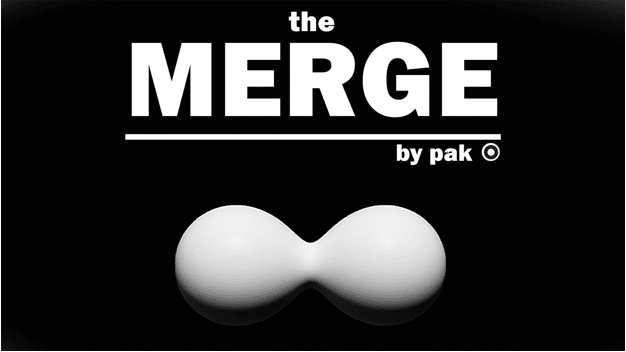
Let’s start with the one that needs a little explanation.
The Merge, created by the digital artist known as Pak, generated a staggering $91.8 million in sales on Nifty Gateway in December 2021.
But here’s the interesting part:
There wasn’t one person who paid $91.8 million for one NFT.
Instead, 28,983 collectors bought a total of 312,686 units called “mass.” The total amount spent across the drop came to $91.8 million. Guinness World Records lists it as the most expensive NFT artwork sold through an open-edition auction.
So what was The Merge?
Pak designed The Merge around the idea of mass.
People could buy units of the artwork. If someone bought more units, their NFT could become larger.
That meant the artwork wasn’t just a static JPEG sitting in someone’s wallet.
The ownership itself was part of the artwork.
And that’s what made The Merge so different from traditional NFTs.
Instead of one person owning one fixed piece, thousands of people became collectors of different amounts of the same larger artwork.
The sale ran for just 48 hours.
During that short period, nearly 29,000 people decided to put real money into Pak’s experiment.
Why did people spend so much?
This is where the NFT market of 2021 becomes important.
NFTs weren’t simply being treated as pictures anymore.
Collectors were buying them as art, status symbols, investments, and pieces of a new digital economy.
Pak already had a strong reputation in the crypto-art world, and The Merge offered something collectors couldn’t get from a normal digital image.
The ownership system itself was part of the experience.
Still, calling The Merge a “$91.8 million NFT bought by one person” would be misleading.
It was a $91.8 million collective sale involving 28,983 buyers.
And that distinction matters.
2. Everydays: The First 5000 Days — $69.3 Million
Created by: Beeple
Buyer: Metakovan
Auction house: Christie’s
Sold: March 2021
Price: $69,346,250
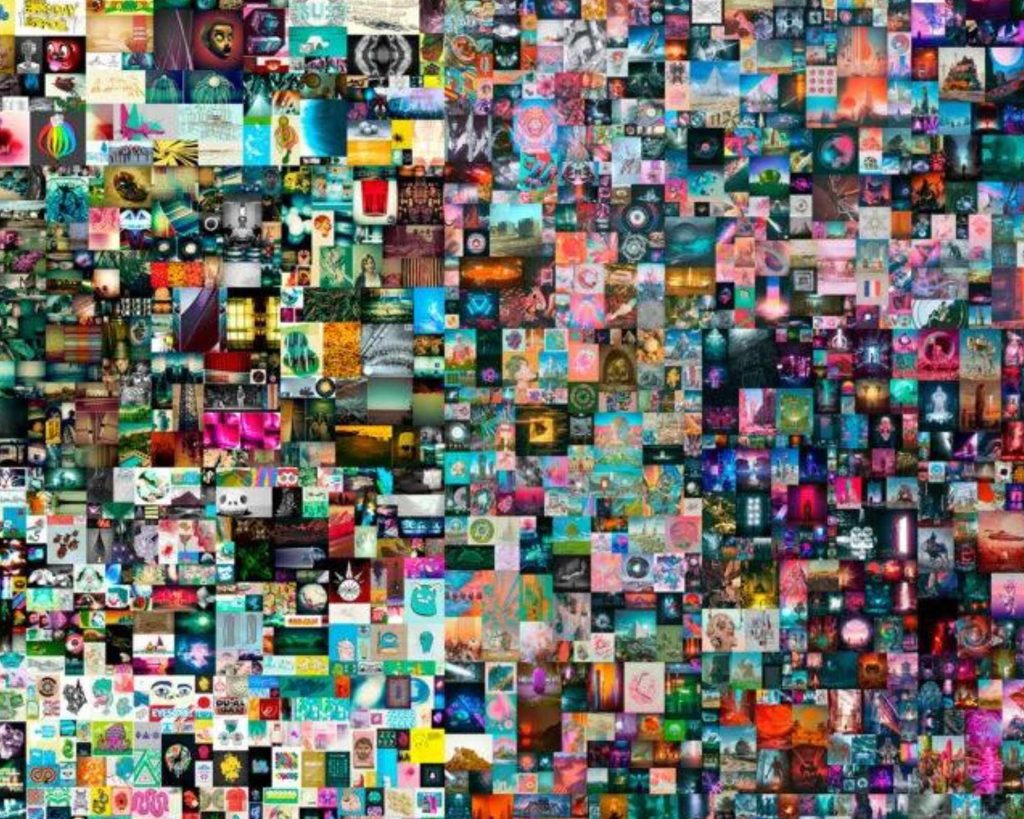
If you’ve ever wondered which NFT really pushed digital art into the mainstream, this is probably the one.
The artwork is called Everydays: The First 5000 Days.
It was created by American digital artist Mike Winkelmann, better known as Beeple.
And the story behind it is almost as interesting as the price.
5,000 days of work
Starting in 2007, Beeple made and posted a new piece of digital art every single day.
He didn’t stop.
After more than 13 years, he had created 5,000 individual artworks.
Beeple then combined those 5,000 images into one enormous digital collage.
That became Everydays: The First 5000 Days. Christie’s describes it as a composition containing every one of Beeple’s first 5,000 “Everydays.”
The artwork itself is filled with strange characters, political references, celebrities, technology, pop culture and Beeple’s own visual style.
But the number 5,000 is what really gives the piece its story.
You’re not just looking at one random digital image.
You’re looking at more than a decade of an artist’s daily work compressed into one piece.
Who bought it?
In March 2021, Christie’s auctioned the NFT.
The winning buyer was Vignesh Sundaresan, better known by his crypto identity Metakovan.
He was the founder and financier of the crypto investment fund Metapurse.
His winning bid came to $69,346,250, making it the most expensive NFT sale at the time. Christie’s officially confirmed Metakovan as the buyer.
And this wasn’t just another crypto marketplace transaction.
It was sold by Christie’s, one of the world’s most famous traditional auction houses.
That was a huge moment.
A major art institution was essentially saying:
Digital art can belong in the same conversation as traditional art.
But why $69 million?
That’s the question people still argue about.
Part of the value came from Beeple himself.
He had built a huge following and had spent more than a decade producing work every single day.
Then there was the timing.
The NFT market was exploding in 2021.
Crypto investors had money.
Collectors were looking for digital art.
And traditional art institutions were beginning to enter the space.
Metakovan later argued that the work represented something bigger than a digital image—the value of more than 13 years of consistent work and the cultural shift toward digital art.
Whether you think the NFT was worth $69 million or not, the sale changed how the art world looked at NFTs.
3. Clock — Around $52.7 Million
Created by: Pak and Julian Assange
Buyer: AssangeDAO
Sold: February 2022
Price: About $52.7 million
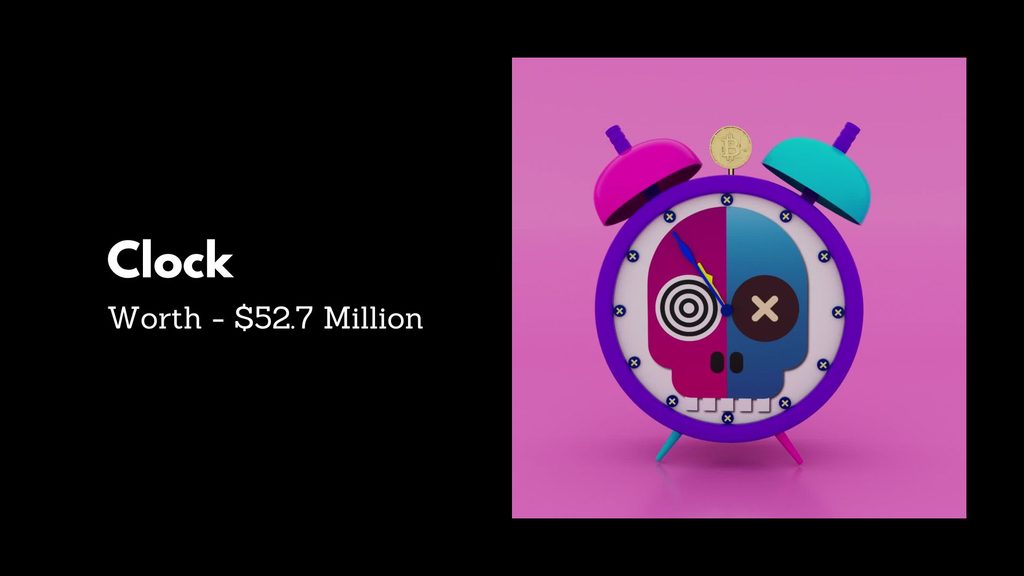
The third NFT on this list has a completely different story.
It’s called Clock.
And unlike many expensive NFTs that were mainly purchased as collectibles or investments, this one had a much bigger purpose behind it.
Clock was created by digital artist Pak in collaboration with Julian Assange, the founder of WikiLeaks.
The artwork is simple.
It displays a counter representing the number of days Assange had spent in prison.
The idea was straightforward, but the reason people wanted it was much bigger than the artwork itself.
Who bought it?
The buyer was AssangeDAO.
A DAO is essentially an online community that can pool money together and make decisions collectively using blockchain-based systems.
In this case, thousands of Assange supporters came together and contributed cryptocurrency to buy the NFT.
AssangeDAO eventually won the auction with a bid of 16,593 ETH, worth roughly $52.7 million at the time.
So once again, this wasn’t a billionaire sitting alone and buying an NFT.
It was a large group of people combining their money for one purchase.
Where did the money go?
This is what makes Clock particularly interesting.
The sale was part of Censored, a collection created by Pak and Assange to raise money connected to Assange’s legal situation.
So the buyers weren’t only purchasing digital art.
They were also supporting a cause they believed in.
That changes the meaning of the purchase.
Someone might look at a $52 million NFT and think:
“Why would anyone pay that much for a digital image?”
But the people behind the Clock purchase weren’t simply buying an image.
They were participating in a political and cultural statement.
What Makes an NFT Worth Millions?
Looking at these three sales, there’s something important to understand.
There isn’t a simple formula that says:
Good artwork = expensive NFT.
It doesn’t work that way.
The price can come from several things.
The artist matters
Beeple already had years of work and a huge following before his record-breaking sale.
Pak had already established a name in the digital-art world.
The reputation behind an NFT can be just as important as the artwork itself.
The story matters
Look at all three examples.
The Merge was about a new way of thinking about digital ownership.
Everydays represented more than 13 years of daily artistic work.
Clock was connected to Julian Assange and a wider political cause.
The story gives people something to care about.
Scarcity matters
NFTs can create a verifiable record of ownership on a blockchain.
That doesn’t automatically make an NFT valuable.
But when a famous artist creates something with limited availability, collectors may compete to own it.
Timing matters
This part is easy to overlook.
All three huge sales happened during the explosive NFT period of 2021–2022.
Money was flowing into crypto.
NFT communities were growing rapidly.
And investors were willing to pay extraordinary prices for digital assets.
That environment played a huge role in these record sales.
One Thing People Often Get Wrong About NFTs
Owning an NFT doesn’t necessarily mean you own the copyright to the image.
That’s a very important distinction.
If you buy an NFT of a piece of digital art, what you own depends on the terms attached to that NFT and the rights granted by the creator.
The artist may still own the copyright.
So an NFT isn’t automatically the same thing as buying the original intellectual property.
What you’re buying is a blockchain-recorded token representing ownership of a particular digital asset or collectible.
And that’s one reason NFT ownership can be confusing for newcomers.
Were These NFTs Really Worth That Much?
That’s impossible to answer objectively.
An NFT is worth whatever a willing buyer is prepared to pay at a particular moment.
The problem is that NFT prices can move dramatically.
Something that sells for millions during a market boom can later trade for far less.
That’s why the original sale price shouldn’t be confused with the NFT’s current value.
The $69.3 million Beeple sale tells us what one buyer was willing to pay in March 2021.
It doesn’t mean someone could necessarily sell the same NFT for $69 million today.
That’s an important lesson for anyone looking at NFTs as an investment.
Final Thoughts
The biggest NFT sales weren’t really about JPEGs.
They were about ownership, culture, technology, reputation, and timing.
Pak’s The Merge showed that an artwork could be owned collectively by thousands of people.
Beeple’s Everydays: The First 5000 Days showed that digital art could command the attention of the traditional art world.
And Clock showed that an NFT could become a way for an online community to come together around a cause.
That’s what makes NFTs interesting.
The technology itself isn’t the whole story.
The real value often comes from the artist, the community, the story behind the work, and the people willing to believe that the digital object matters.
And that’s also why anyone thinking about buying an NFT should look beyond the price tag.
Ask who created it.
Ask why people want it.
Look at the ownership history.
Understand what rights you’re actually receiving.
And most importantly, don’t assume that because someone once paid millions for an NFT, it must automatically be worth millions today.
In the NFT world, the story can create the value—but the market ultimately decides what that value is.